Newsroom
Prof. Mohammad Abdul Aziz from Jahangirnagar University Visits IHB
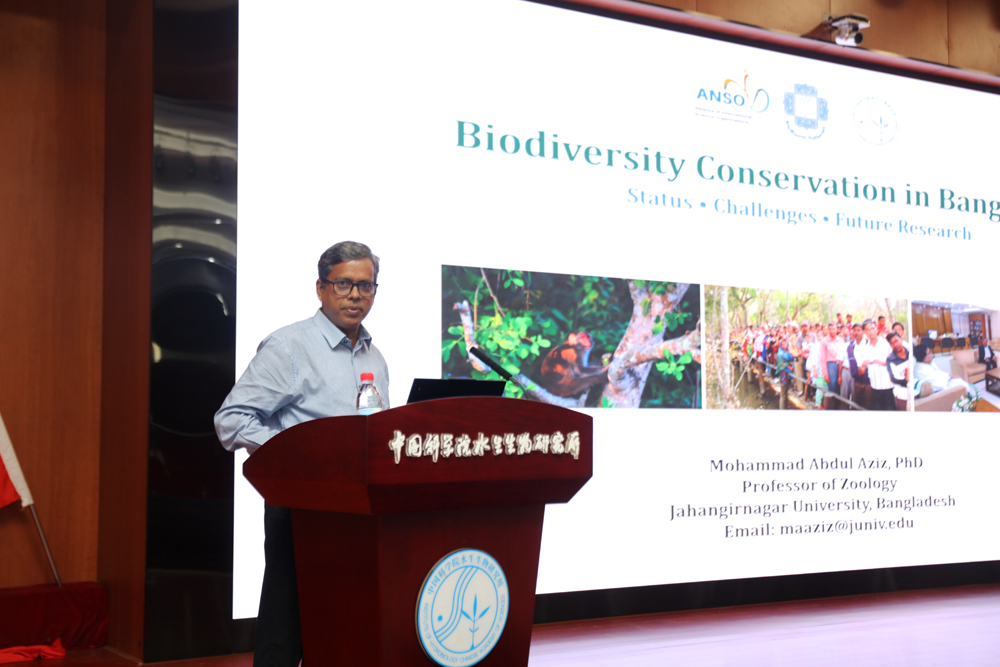
On Sept. 4, 2026, Prof. Mohammad Abdul Aziz from the Department of Zoology at Jahangirnagar University in Bangladesh visited the Institute of Hydrobiology (IHB) of the Chinese Academy of Sciences and delivered a lecture titled "Biodiversity Conservation in Bangladesh." (Credit: IHB)
On Sept. 4, 2026, Prof. Mohammad Abdul Aziz from the Department of Zoology at Jahangirnagar University in Bangladesh visited the Institute of Hydrobiology (IHB) of the Chinese Academy of Sciences and delivered a lecture titled "Biodiversity Conservation in Bangladesh."
During the lecture, Prof. Aziz provided a systematic overview of Bangladesh's rich biological resources. Located in the Ganges-Brahmaputra-Meghna river system and at the northern edge of the Bay of Bengal, Bangladesh is home to many threatened species, including the Bengal tiger, Asian elephant, Ganges river dolphin, otter and pangolin. He elaborated on the challenges facing conservation, including habitat loss, rapid development, pollution, climate change and human-wildlife conflict. He also highlighted the Sundarbans, the world's largest contiguous mangrove forest, and the Swatch of No Ground, a unique deep-sea ecosystem in the Bay of Bengal.
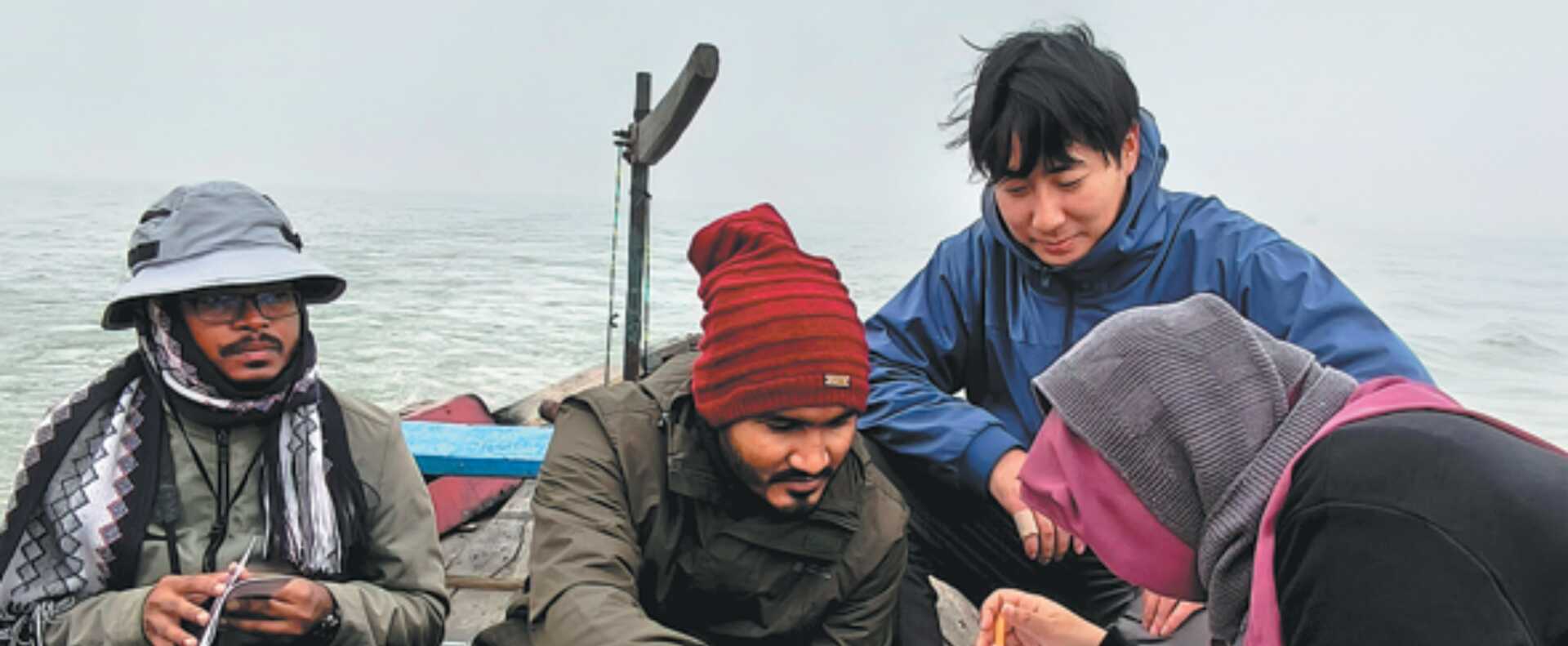
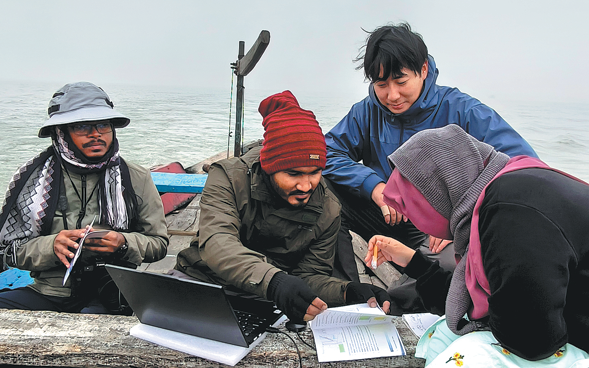
Drawing on long-term field research and conservation experience, Prof. Aziz introduced methods for wildlife monitoring and population assessment, presented results and new challenges, and outlined prospects for China-Bangladesh cooperation in biodiversity research, ecological monitoring, river and wetland conservation, and the application of modern technology. He particularly noted that a Chinese team recorded 146 acoustic signals from Ganges river dolphins during a survey of the Jamuna-Padma river in January 2026, describing it as a typical example of how China's Yangtze finless porpoise conservation experience is benefiting global efforts to protect small endangered cetaceans.
IHB deputy director XU Jun and XU Shuwen, representative of the Alliance of International Science Organizations (ANSO), attended the event and delivered remarks. Representatives from the Hubei Association for Science and Technology and the Hubei Youth Activity Center, as well as IHB faculty and students, also attended the lecture.
In his remarks, XU Jun noted that the Yangtze River and the Ganges-Brahmaputra river systems carry equally important ecological functions and unique aquatic biodiversity. With joint funding from the Chinese Academy of Sciences and ANSO, IHB has developed a mature "acoustic monitoring plus smart management" technical system for Yangtze finless porpoise conservation, which is now being replicated and applied in Cambodia, Myanmar and Bangladesh. He said the exchange focused on freshwater dolphin monitoring methods, acoustic data analysis, population dynamics assessment and field training.
XU Shuwen introduced ANSO as a non-governmental, non-profit international scientific organization founded in 2018 by the Chinese Academy of Sciences together with 36 founding institutions. ANSO is dedicated to serving sustainable development in Belt and Road partner countries and regions, she said. The China-Bangladesh acoustic monitoring and conservation project for the Ganges river dolphin has not only advanced freshwater biodiversity science but also strengthened practical conservation capacity.
Prof. Aziz has long been engaged in wildlife research and conservation. He previously served as chief technical expert in leading the drafting of Bangladesh's conservation action plans for the Ganges river dolphin and the Irrawaddy dolphin. His research covers wildlife population monitoring, conservation genetics, human-wildlife conflict, and evidence-based management of endangered species and their habitats. In 2023, he received the Bangabandhu Wildlife Conservation Award, Bangladesh's highest national honor in the field of wildlife conservation, presented by the country's prime minister.