Newsroom
First Yangtze River Ecological Environment Education Alliance Launches in Chishui, Guizhou
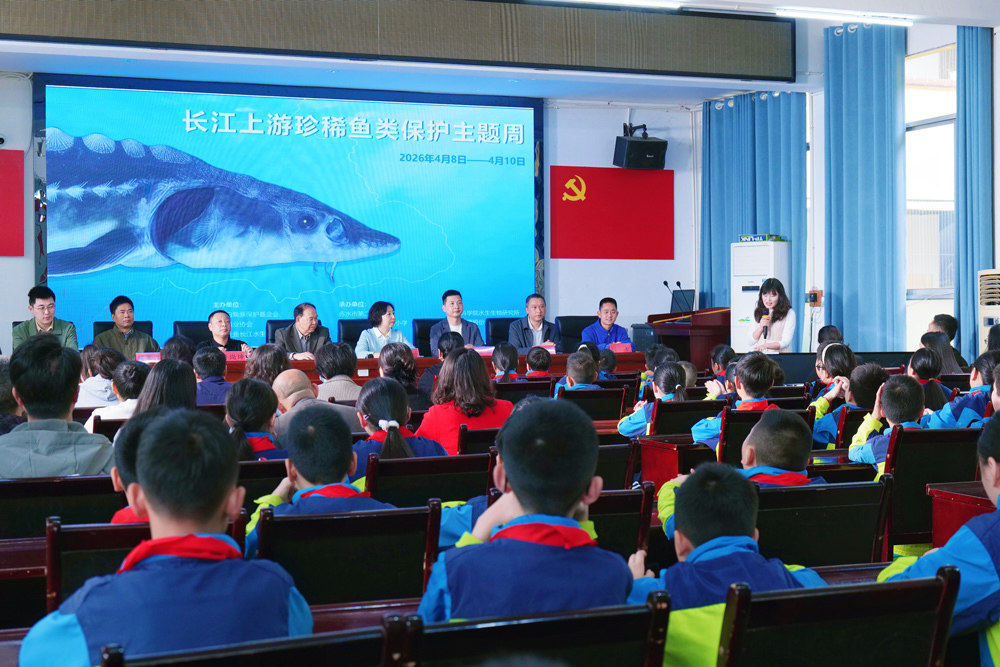
The launch ceremony of the country's first Yangtze River Ecological Environment Education Alliance takes place in Chishui City, Guizhou Province, on April 8. (Credit: IHB)
The country's first Yangtze River Ecological Environment Education Alliance launched in Chishui City, Guizhou Province, on April 8.
Supported by the Institute of Hydrobiology (IHB) of the Chinese Academy of Sciences, the initiative is built around a core idea: a "Demonstration School for the Protection of Rare and Endemic Fish in the Upper Yangtze River" – the first of its kind in the nation.
The alliance aims to fix two persistent problems in the upper Yangtze region: fragmented environmental education resources and a lack of basic infrastructure. Its approach combines multiple stakeholders, local adaptation, region-wide coordination, and hands-on science learning.
The launch promises to bring coordinated environmental education to primary and secondary schools across the entire Yangtze basin, breathing new life into the broader effort to protect China's longest river.
The Chishui River, the only first-class tributary in the upper Yangtze River that maintains its natural flow regime, serves as a pilot demonstration area for the Yangtze River's "10-year fishing ban." It is also renowned as the "last refuge" for rare and endemic fish in the upper Yangtze River, underscoring its exceptional ecological importance.
That unique geographic advantage led to the establishment of the nation's first "Demonstration School for the Protection of Rare and Endemic Fish in the Upper Yangtze River" at Chishui No. 2 Primary School on December 10, 2025.
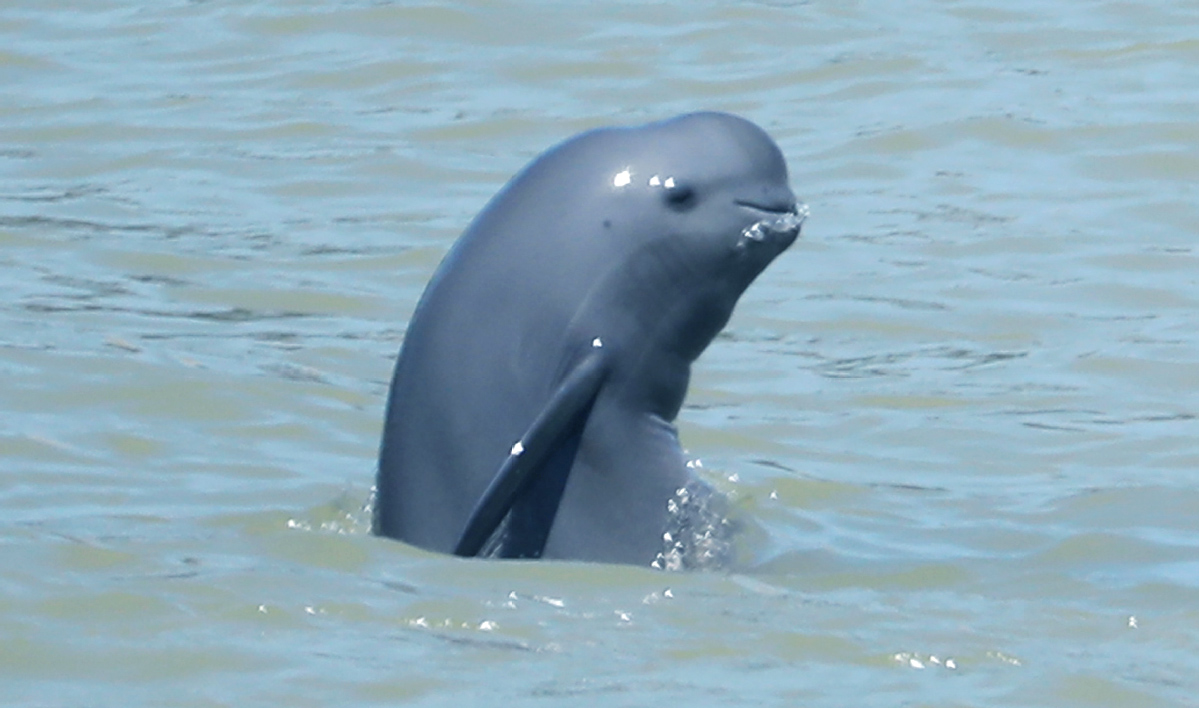
This initiative not only fills a gap in campus ecological environment education regarding rare and endemic fish in the upper Yangtze River but also achieves a cross-regional and cross-species extension of Yangtze River ecological protection education, from the protection of the Yangtze finless porpoise in the lower reaches to the protection of rare and endemic fish in the upper reaches.
"Educate one child, influence one family, and inspire an entire society."
That guiding principle drove the Wuhan Baiji Dolphin Conservation Foundation to help bring together two schools separated by more than 1,000 kilometers.
Chishui No. 2 Primary School, nestled along the upper Yangtze, and Changchunjie Primary School in Wuhan's Jiang'an District, near the river's middle reaches, have formed a cross-regional environmental education partnership.
The alliance focuses on two flagship species: the Yangtze sturgeon and the Yangtze finless porpoise. Its work centers on four core activities: developing shared curricula, exchanging teachers, organizing student visits across regions, and running joint hands-on projects.
The partnership rests on four strategic pillars: sharing resources, fostering interaction between teachers and students, co-building a shared brand, and spreading results. Together, these create a platform for environmental education that bridges both geography and species.
The goal is simple: let the protection of rare fish upstream and the conservation of finless porpoises downstream become a shared mission. In doing so, the alliance aims to set a national benchmark for watershed-scale environmental education.
To make environmental education more accessible and engaging, the alliance taps into the Yangtze River basin's rich scientific research resources.
Research breakthroughs, such as advances in Yangtze sturgeon breeding and finless porpoise monitoring, are turned into materials that children can actually enjoy: illustrated science picture books, animated short films, and hands-on experiments.
The approach is threefold: immersive classrooms, experiential field studies, and interactive science activities. The goal is to help young students understand why protecting the Yangtze's biodiversity matters – without feeling like they are sitting through a lecture.
The alliance inherits the established framework of Wuhan's "Guardian Schools" while adapting deeply to Chishui's local context. It blends the Chishui River's rare fish with the region's own cultural heritage and compulsory education curriculum.
Going forward, the two schools will share curriculum resources, exchange teachers, and offer cross-regional field study opportunities. The goal is to help young people from across the Yangtze basin grow together, and to ensure that ecological protection transcends geography, taking real root in people's hearts.