Newsroom
CHEN Peixun at 100: A Pioneer of China's Freshwater Cetacean Conservation

IHB deputy director XIE Shouqi (R) leads delegation to Shanghai to visit CHEN Peixun, presents commemorative album A Hundred Years on the Yangtze: Chen Peixun and the Guardianship of Yangtze Cetaceans. (Credit: IHB)
On July 5, 2026, two birthdays converged in a celebration of science and survival.
CHEN Peixun, a founding figure of China’s freshwater cetacean conservation biology, turned 100. On the same day, “Taotao,” the world‘s first Yangtze finless porpoise born and raised under human care, turned 21.
The “Century of Splendor, Eternity of Cetaceans” event unfolded across two cities, Shanghai and Wuhan, with researchers from four generations gathering in person and online to honor both milestones.
“I still want to go to the Yangtze River,” the centenarian murmured, reaching out to wipe tears from the face of WANG Ding, Professor of the Institute of Hydrobiology (IHB) of the Chinese Academy of Sciences. The moment moved audiences in both venues.
At 51, She Was Tapped to Build a Field from Scratch
Born on July 5, 1927, Chen joined IHB in 1952.
In 1978, the government assigned IHB a mission: study the biology and conservation of the baiji, the Yangtze River dolphin. At the time, China had no established theory, no captive-care experience, and no international precedent to follow.
Chen, then 51, was tapped to lead the baiji research group. She led the rescue and long-term care of “Qiqi,” the first and only baiji ever kept in captivity for an extended period. That work launched an entirely new field of research in China: the conservation biology of Yangtze cetaceans.
To mark her centenary, IHB and the Wuhan Baiji Conservation Foundation (WBCF) released a commemorative album, “A Hundred Years on the Yangtze: CHEN Peixun and the Guardianship of Yangtze Cetaceans,” chronicling the history of research and protection efforts.
Taotao at 21: From Firstborn to Father of Four
On July 5, 2005, Taotao was born at the Baiji Dolphinarium in Wuhan, the first Yangtze finless porpoise in the world to be naturally conceived and born in a captive environment.
Twenty-one years later, he has fathered three sons and one daughter. His eldest son, “Hanbao,” and daughter, “Xiaojiujiu,” have both reached sexual maturity. His youngest son, “Xiao 26,” was born on May 22, 2026.
The species typically lives 20 to 25 years, putting Taotao in his senior years. But researchers say he remains in generally good health.
His lineage proves what scientists once only hoped for: captive-bred Yangtze finless porpoises can reproduce and carry the population forward.
“Taotao represents a complete life cycle sample, from birth and sexual maturity to reproduction and aging, and his research data provide vital support for protecting wild populations,” said HAO Yujiang, director of the Yangtze Cetacean Breeding and Conservation Center at IHB.
Four Generations, One River
Chen began her work with little more than a boat and a willingness to follow the river. Today, the conservation effort is backed by national law, a 10-year fishing ban on the Yangtze, and coordinated action across multiple government agencies.
The population of the Yangtze finless porpoise, a national first-class protected species and a “barometer” of the river‘s ecological health, reached 1,426 individuals in 2025, up from 1,249 in 2022.
Captive breeding technology has matured, and six captive-bred porpoises have been released back into the Yangtze.
On Chen’s 100th birthday, the four generations of scientists who followed her lead gathered around a double birthday cake, one for the centenarian, one for Taotao, to sing and share a moment that spanned decades and distances.
A Lasting Legacy
Her legacy, in the end, is not just in the rising population numbers. It is in the lesson she left behind: when she started her research at 51, with a single boat and no blueprint, she showed that science can begin at any age, and that its truest purpose is to serve the creatures that cannot speak for themselves.
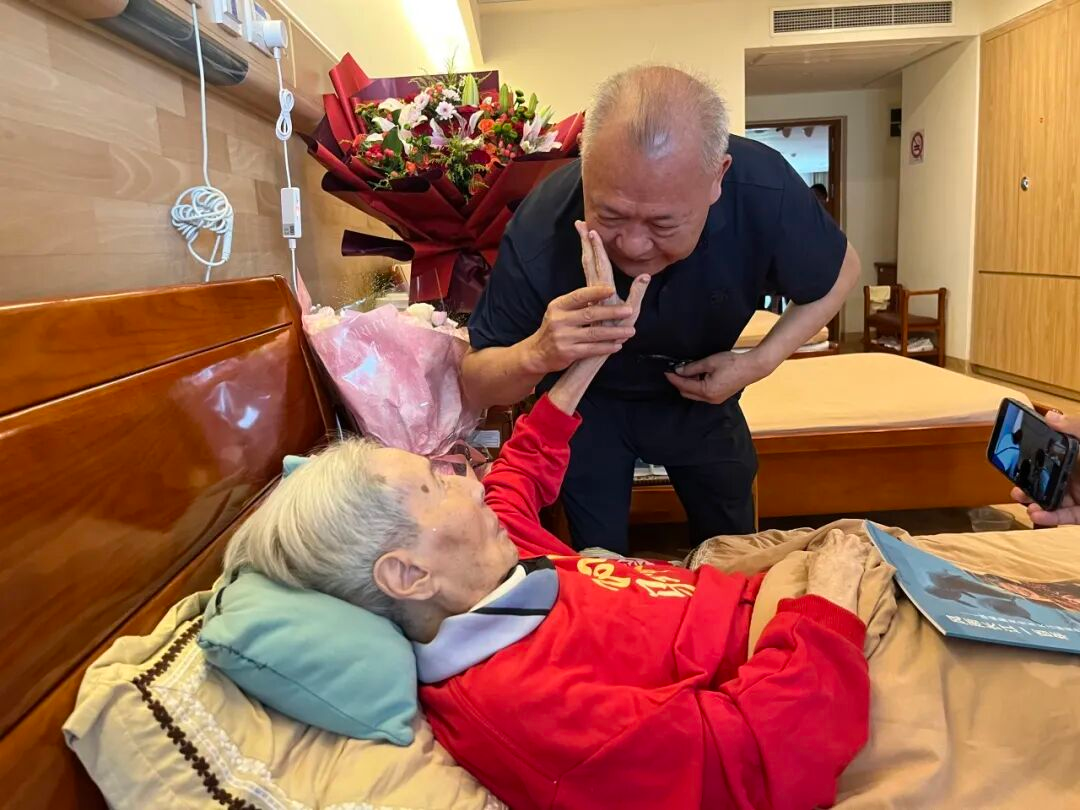
CHEN Peixun appeared to recognize her former student WANG Ding (former deputy director of IHB). (Credit: IHB)
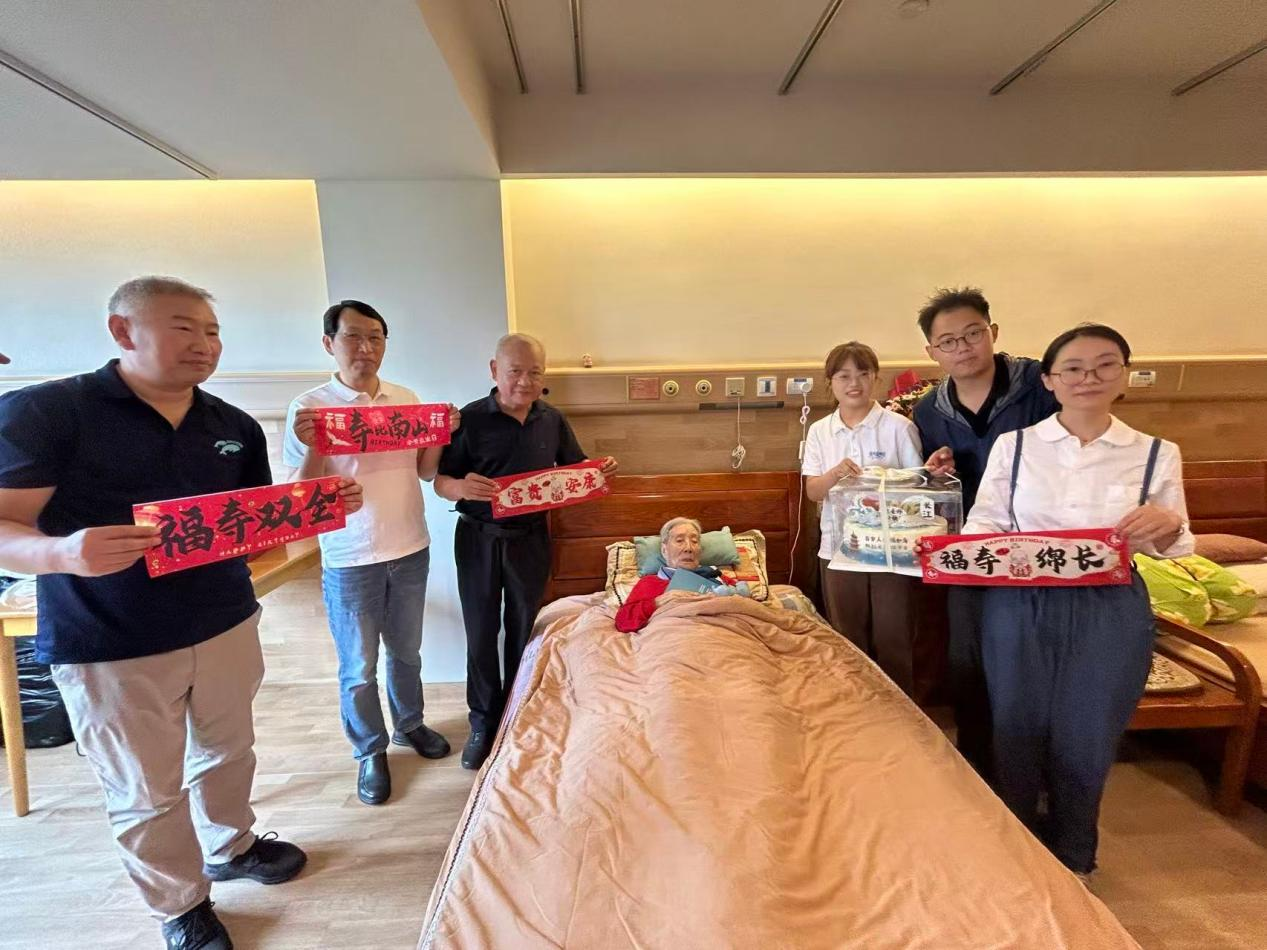
Four generations of researchers in one frame. (Credit: IHB)