Research
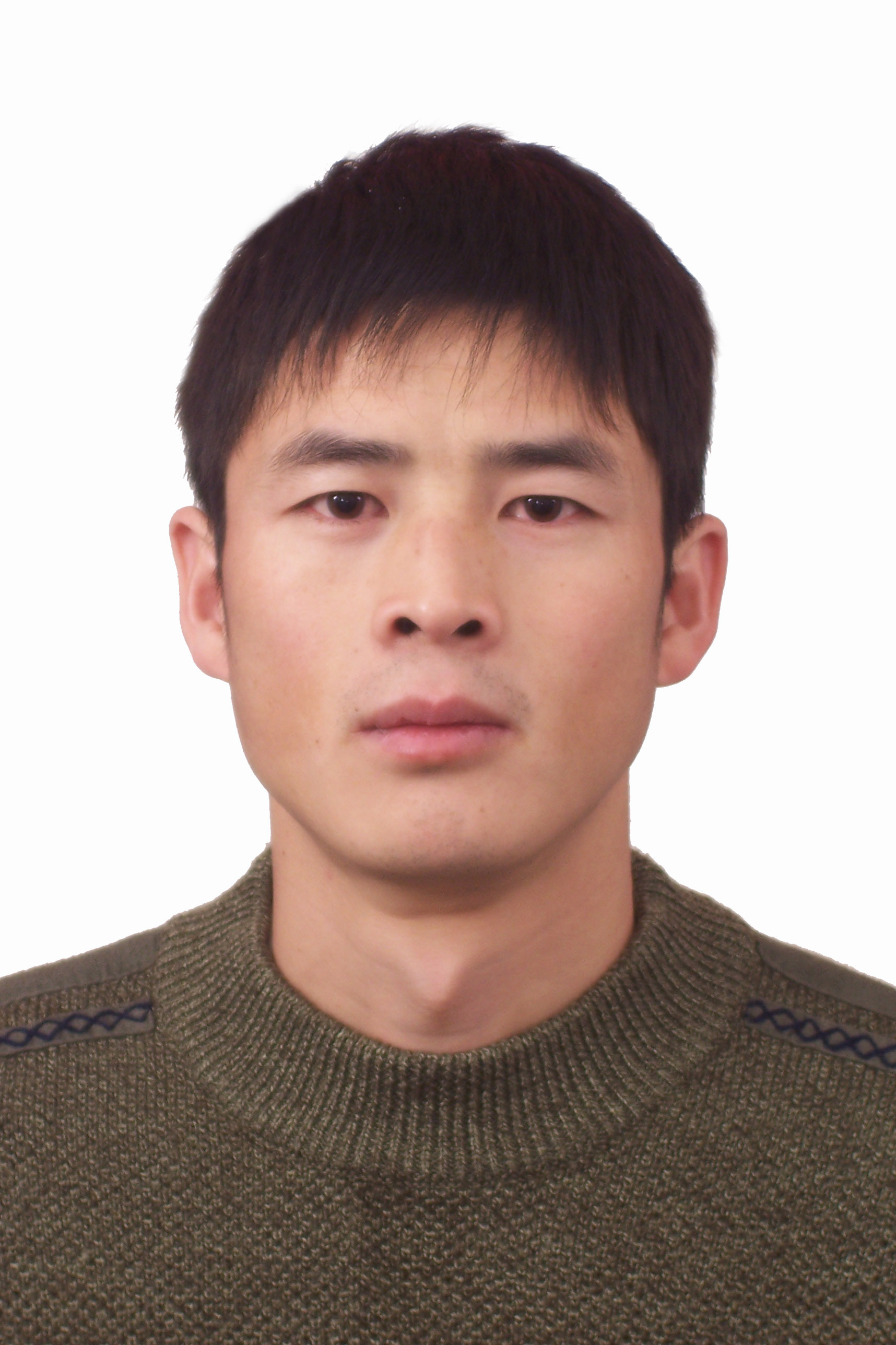
| Name: | HU Hanhua |
|---|---|
| Academic Title: | Professor |
| Education: | Ph.D. |
| Phone: | 86-27-68780078 |
| E-mail: | hanhuahu@ihb.ac.cn |
Resume:
Personal Data:
Hanhua Hu, Male, obtained his PhD from Institute of Hydrobiology, Chinese Academy of Sciences (CAS) in 2001, and then joined School of life sciences, Xiamen University in August 2001 as Assistant Professor. From January 2002 to February 2004 he carried out his post-doctoral training at Institute of Process Engineering, Chinese Academy of Sciences. In March 2004 he became an associate professor at Institute of Hydrobiology, Chinese Academy of Sciences. From January 2008 to January 2010, he worked as a visiting scholar/Postdoc in the Département de biologie at École normale supérieure (Paris,
Research Experience:
Jul. 2011 –Present: Diatom Biology, Institute of Hydrobiology, CAS
Mar. 2004 –Jul. 2011: Diatom and Antarctic Microalgae Biology, Institute of Hydrobiology, CAS
Jan. 2008 – Jan. 2010: Visiting scholar, Diatom Molecular Biology, Département de Biologie, École Normale Supérieure (Paris,
Jan. 2002 – Feb. 2004: Postdoc, Red Tide Algae, State Key Laboratory of Biochemical Engineering, Institute of Process Engineering, CAS
Aug. 2001 – Feb. 2004: Assistant Professor, Algal Physiology, School of Life Sciences, Xiamen University
Selected Publications:
[1]. Ge F, Huang W, Chen Z, Zhang C, Xiong Q, Bowler C, Yang J, Xu J, Hu H*. 2014. Methylcrotonyl-CoA carboxylase regulates triacylglycerol accumulation in the model diatom Phaeodactylum tricornutum. The Plant Cell. 26(4): 1681–1697. (*Corresponding author)
[2]. Zhang C, Hu H*. 2014. High-efficiency nuclear transformation of the diatom Phaeodactylum tricornutum by electroporation. Marine Genomics. 16: 63−66.
[3]. Pan Y, Yang J, Gong Y, Li X, Hu H*. 2017. 3-hydroxyisobutyryl-CoA hydrolase involved in isoleucine catabolism regulates triacylglycerol accumulation in Phaeodactylum tricornutum. Philosophical Transactions of the Royal Society B‐Biological Sciences. 372(1728): 20160409.
[4]. Rastogi A, Vieira FRJ, Deton-Cabanillas A-F, Veluchamy A, Cantrel C, Wang G, Vanormelingen P, Bowler C, Piganeau G, Hu H*, Tirichine L*. 2020. A genomics approach reveals the genetic polymorphism, structure and functional diversity of ten accessions of the diatom Phaeodactylum tricornutum. The ISME Journal. 14: 347–363.
[5]. Yang J, Liu J, Pan Y, Maréchal E, Amato A, Liu M, Gong Y, Li Y, Hu H*. PDAT regulates PE as transient carbon sink alternative to triacylglycerol in Nannochloropsis. 2022. Plant Physiology. 189(3): 1345−1362.
[6]. Yin W, Hu H*. 2023. CRISPR/Cas9-mediated genome editing via homologous recombination in a centric diatom Chaetoceros muelleri. ACS Synthetic Biology. 12(4): 1287−1296.
[7]. Pan Y, Zhang W, Wang X, Jouhet J, Maréchal E, Liu J, Xia X, Hu H*. 2024. Allele-dependent expression and functionality of lipid enzyme phospholipid:diacylglycerol acyltransferase affect diatom carbon storage and growth. Plant Physiology. 194(2): 1024–1040.
[8]. Huang T, Pan Y, Maréchal E, Hu H*. 2024. Proteomes reveal the lipid metabolic network in the complex plastid of Phaeodactylum tricornutum. The Plant Journal. 117(2): 385–403.
[9]. Hu H*, Gao K. 2006. Response of growth and fatty acid compositions of Nannochloropsis sp. to environmental factors under elevated CO2 concentration. Biotechnology Letters. 28(13): 987−992.
[10]. Allen AE, Dupont CL, Oborník M, Horák A, Nunes-Nesi A, McCrow JP, Zheng H, Johnson DA, Hu H, Fernie AR, Bowler C. 2011. Evolution and metabolic significance of the urea cycle in photosynthetic diatoms. Nature. 473(7346): 203–207.