Highlights
IHB Researchers Explore How AI is Reshaping Biological Taxonomy
Artificial intelligence (AI) is increasingly intertwined with scientific discovery, reshaping research paradigms across disciplines. Under China’s national “AI for Science” initiative, AI-driven knowledge discovery is moving rapidly from vision to practice. Recently, a research team led by Prof. HE Shunping from the Institute of Hydrobiology (IHB) of the Chinese Academy of Sciences, published a comprehensive review titled “Advancing biological taxonomy in the AI era: deep learning applications, challenges, and future directions” in Science China Life Sciences.
The paper highlights that biological taxonomy has reached a critical turning point, shifting from traditional morphology- and molecular-based frameworks toward an AI-driven paradigm. Deep learning is transforming multiple key processes of species identification and classification, from image recognition and bioacoustic monitoring to DNA sequence analysis and trait interpretation.
The researchers systematically summarize recent progress in deep learning applications across four domains—biological images, sounds, DNA/eDNA sequences, and trait-based mechanisms—and note that foundation models treating genomes as a “language” are emerging. These models enable cross-scale inference from nucleotide sequences to phenotypic traits, suggesting that an “AI taxonomist” may soon serve as a novel infrastructure for future biological research.
The review further emphasizes that AI will not replace taxonomists; instead, it is reshaping their methodological and analytical workflows. The deep understanding of organismal traits and evolutionary contexts possessed by taxonomists remains essential for guiding and calibrating AI models.
In the context of ecological monitoring technology, the IHB team has also developed several intelligent systems, including automated plankton and benthic organism recognition platforms, which significantly shorten the workflow from sample processing to reporting. These tools provide early biological evidence for environmental risk assessment and offer practical support for long-term ecological monitoring, environmental evaluation, and water-ecosystem management.
As a long-standing ichthyologist, Prof. He stresses that in the AI-driven era, taxonomists must evolve from “nomenclators” to “standard setters” and “model calibrators.” Their expertise in morphological and functional traits provides irreplaceable cognitive grounding for training and constraining foundation models, ensuring that AI systems capture true biological causality rather than superficial correlations.
This work reveals the accelerating convergence between traditional taxonomy and artificial intelligence, outlining the discipline’s transition from experience-driven to data- and model-driven approaches. It also offers a conceptual and methodological framework for the intelligent development of ecological monitoring and biological foundation models.
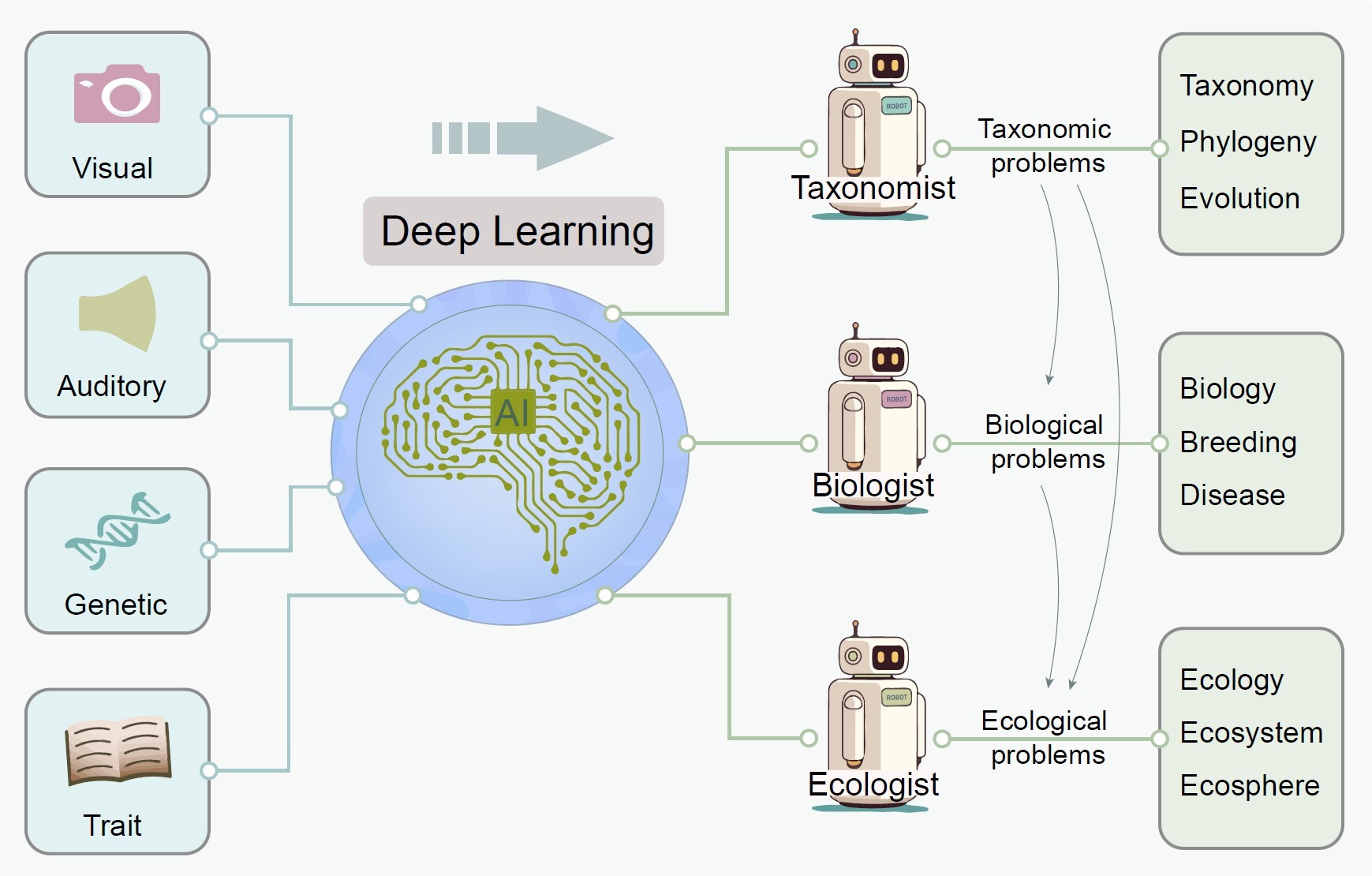
Schematic diagram of the use of visual, audio, genetic, and trait data for deep learning model training and applications. (Image by IHB)
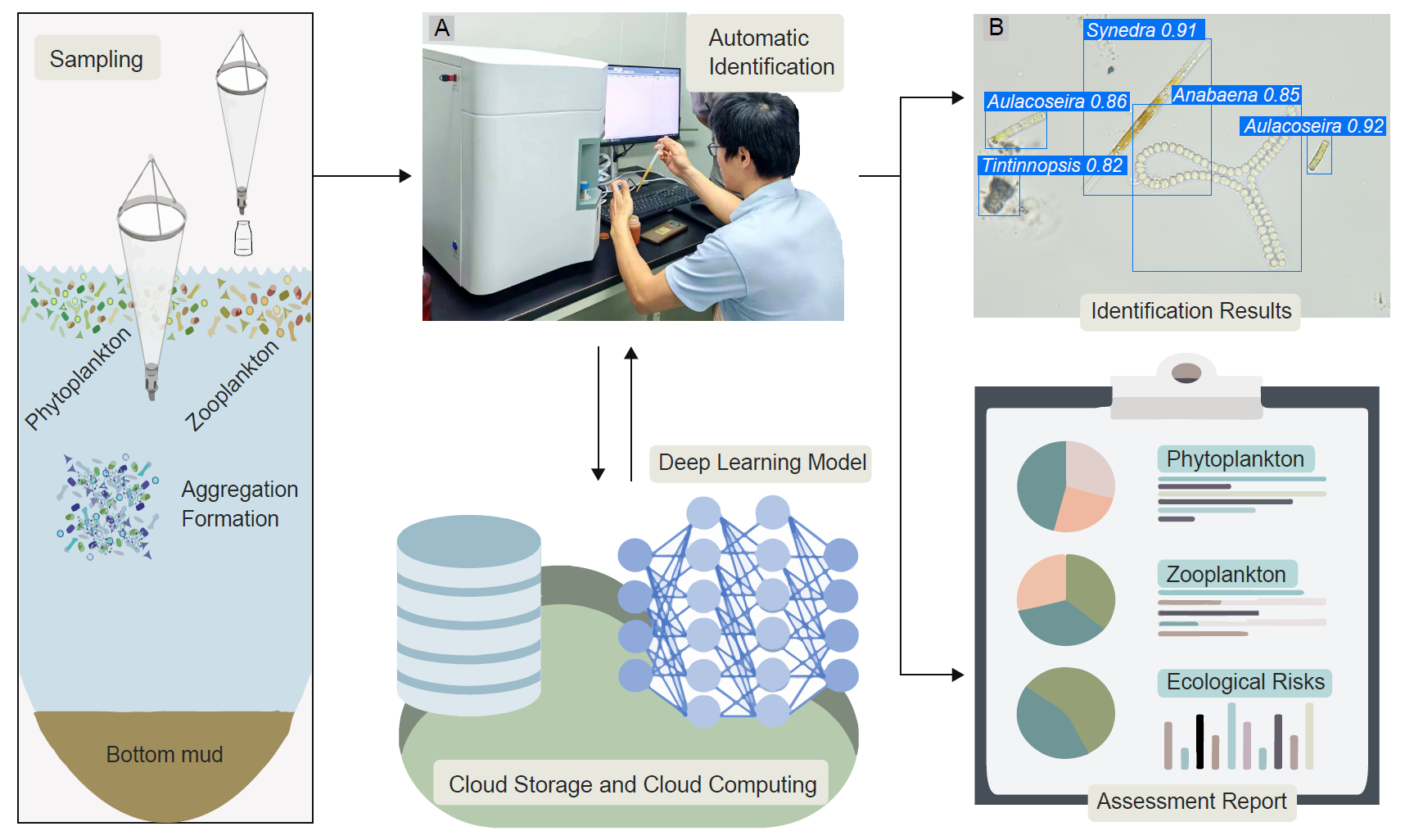
Deep learning models trained on large numbers of images are used to recognize plankton. (Image by IHB)
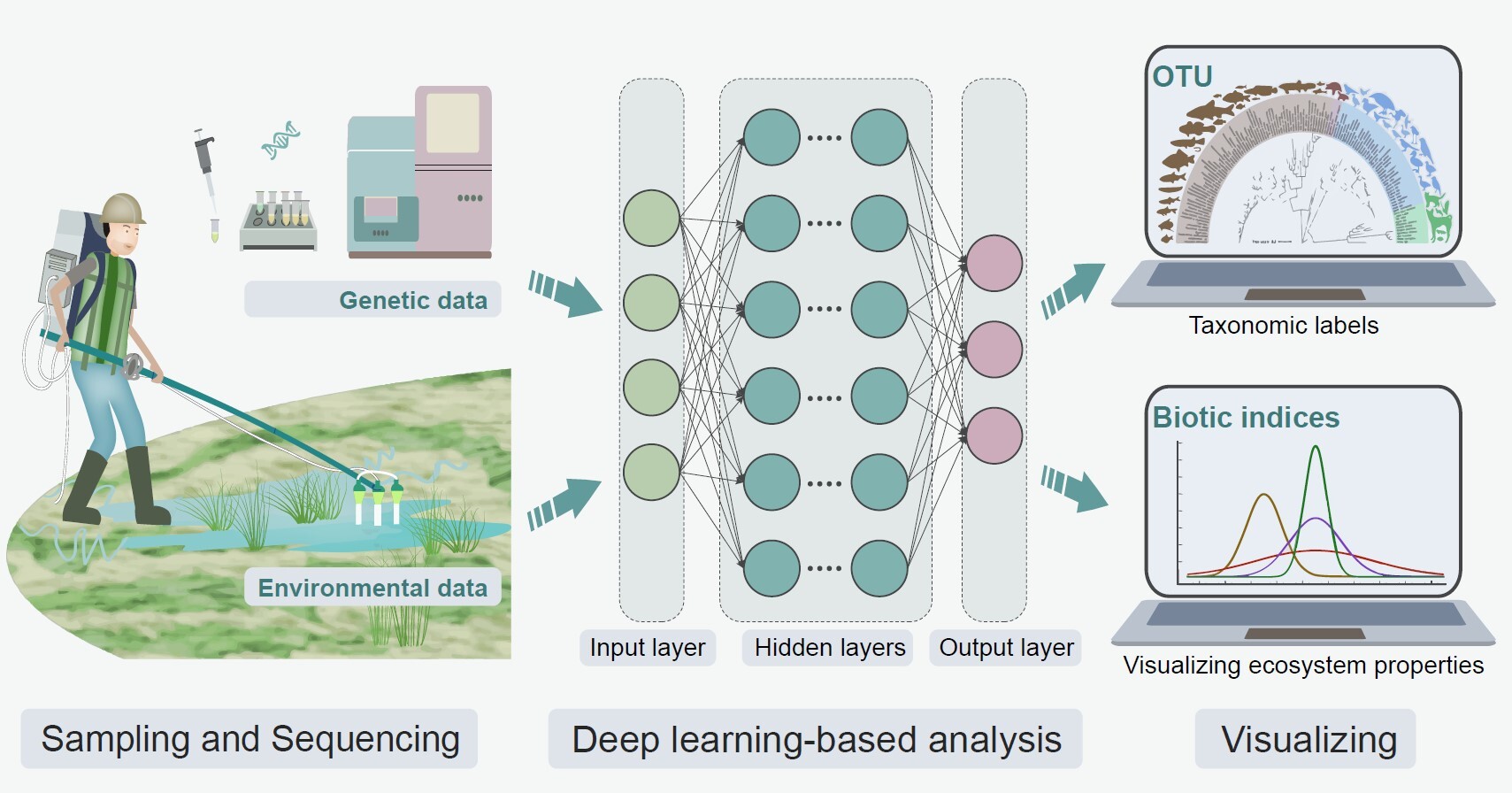
Application of deep learning models to eDNA. (Image by IHB)
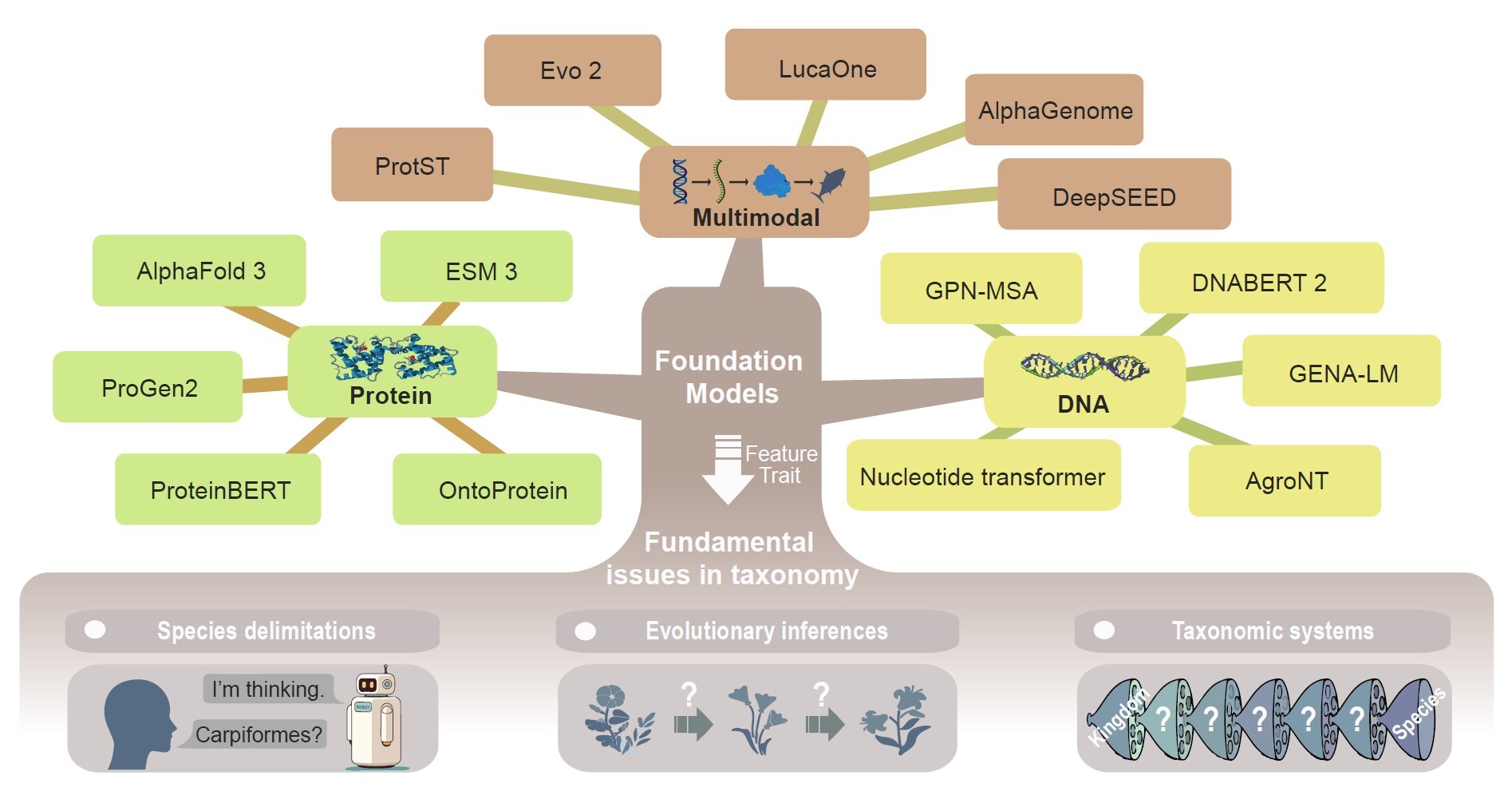
Landscape of foundation models and fundamental issues in biological taxonomy. (Image by IHB)
(Editor: MA Yun)