Newsroom
IHB Intelligent Fish Recognition System Recognized as Major National Agricultural Achievement
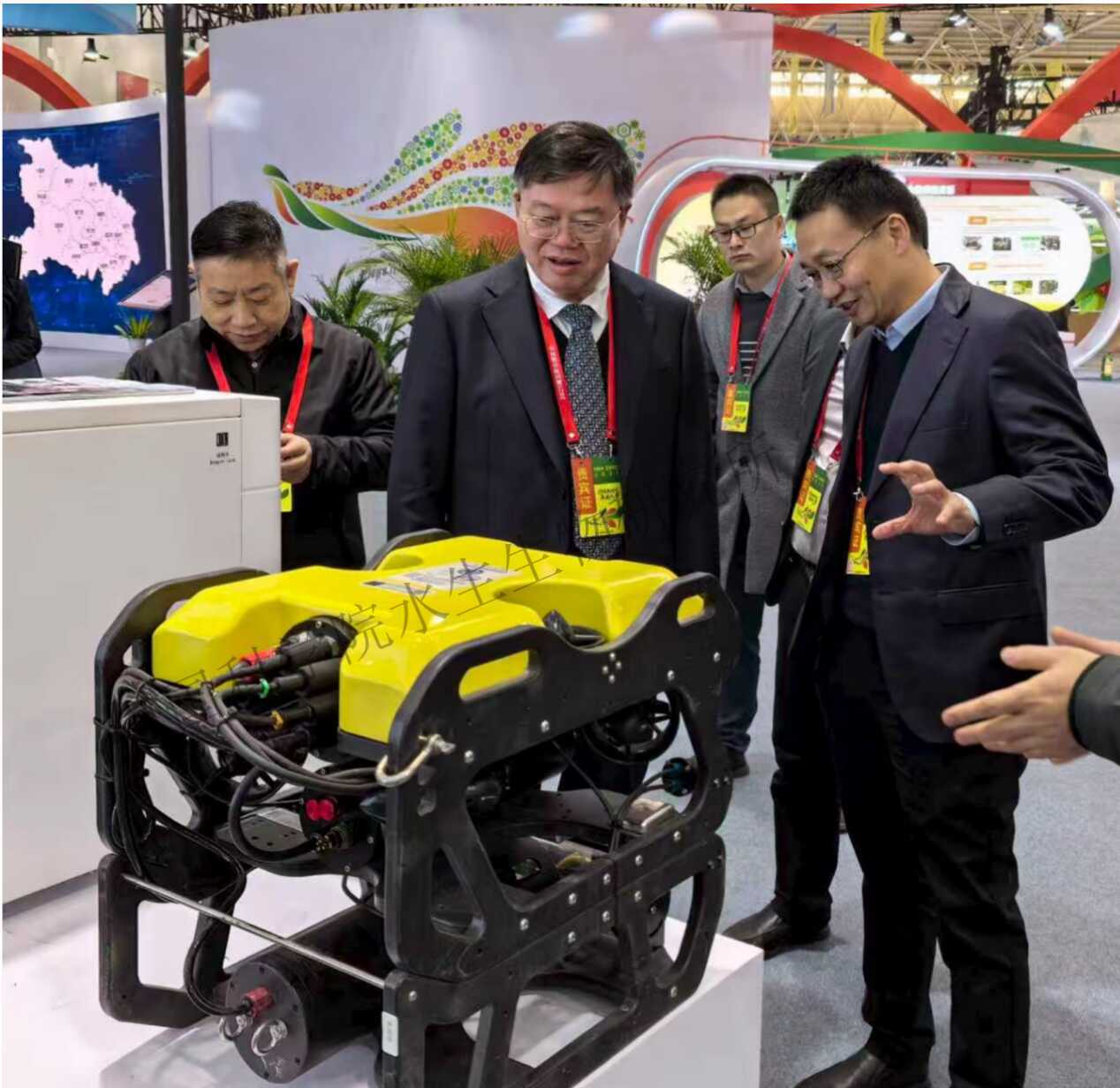
The Intelligent Fish Recognition and Monitoring System was recently showcased at the 2025 Hubei Agricultural Expo. (Credit: IHB)
The Intelligent Fish Recognition and Monitoring System developed by the Fishery Intelligent Technology and Equipment Research Team at the Institute of Hydrobiology IHB of the Chinese Academy of Sciences has been selected as one of the 2025 China Major New Agricultural Science and Technology Achievements. The technology was recently showcased at the 2025 Hubei Agricultural Expo, highlighting its role in the digital transformation of aquatic conservation and industry.
The national recognition was announced on November 21, 2025, at the 12th China Modern Agricultural Development Forum and the 2025 Annual Meeting of the Chinese Society of Agricultural Sciences in Hangzhou. The IHB system was among 95 projects chosen nationwide to represent the current stage of Chinas agricultural innovation, which included 37 new technologies, 38 new products, and 20 new application scenarios.
On November 29, 2025, the system was featured at the 2025 Hubei Agricultural Expo in Wuhan. Organized by the Hubei Provincial Department of Agriculture and Rural Affairs and the Provincial Rural Revitalization Bureau under the theme Building a New Era Land of Fish and Rice, the expo displayed landmark achievements in Hubei since the start of the 14th Five-Year Plan. The IHB system was highlighted as one of 20 key innovations that demonstrate the integration of scientific research with industrial growth.
Accurate and long-term monitoring is essential for the protection and sustainable use of fish resources. To address common challenges such as poor visibility and inaccurate identification in underwater environments, the IHB research team overcame several core technical hurdles. These include the construction of identification benchmarks and databases, multi-modal intelligent recognition, and advanced acoustic-optical sensor design.
The resulting system provides non-invasive, real-time, and precise data on fish morphology, behavior, species types, biomass, habitat conditions, and biodiversity. It has already been successfully deployed in more than 10 different marine and freshwater scenarios. By providing a cost-effective and domestically developed solution, the system offers innovative industry standards for aquaculture management and the evaluation of aquatic ecosystem health.