Newsroom
Vice Mayor of Luzhou Visits IHB
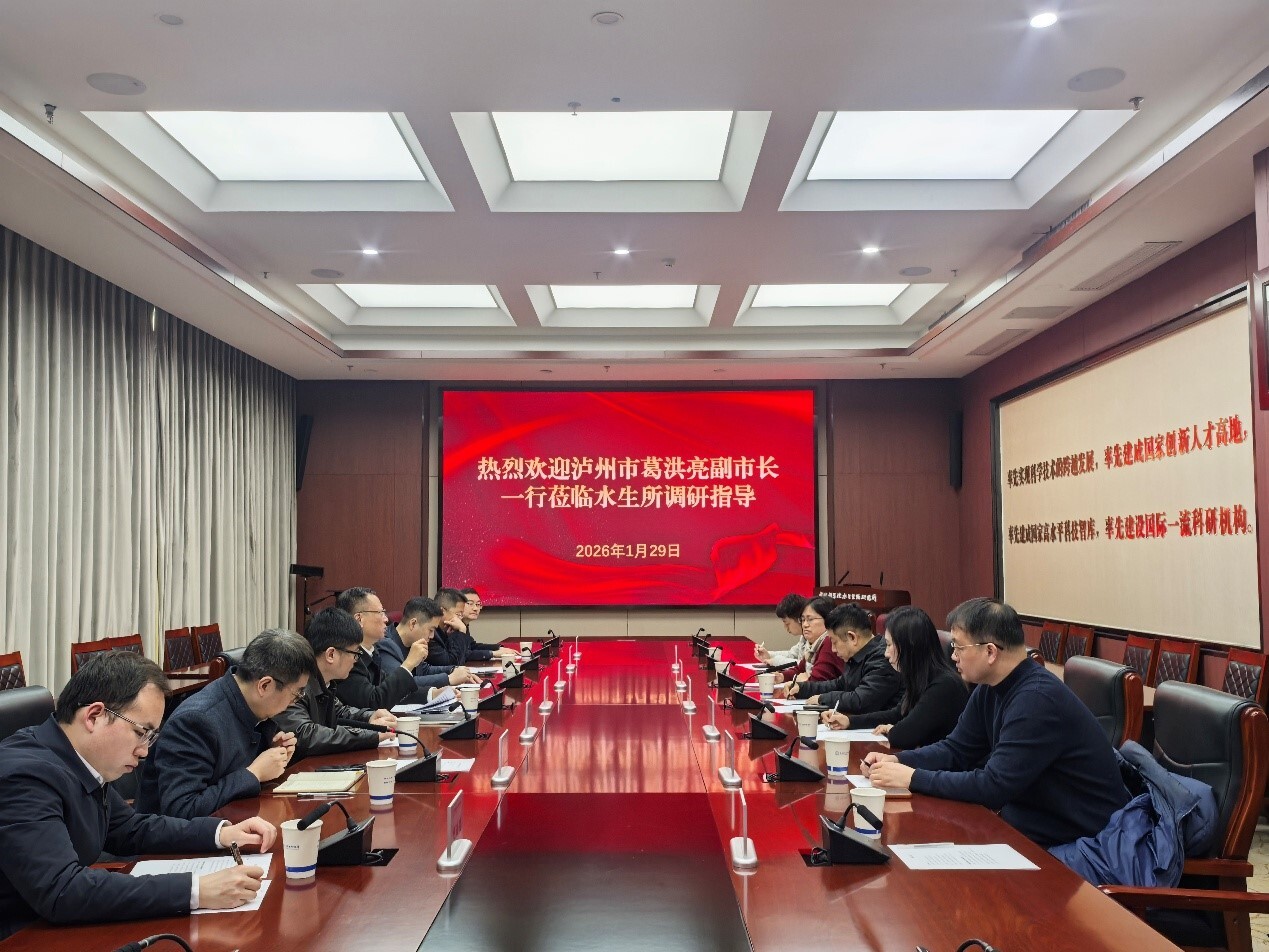
A delegation from Luzhou, a city in southwestern China's Sichuan Province, visited IHB on January 29 to explore cooperation opportunities in ecological protection and fisheries development. (Credit: IHB)
A delegation from Luzhou, a city in southwestern China's Sichuan Province, visited the Institute of Hydrobiology (IHB) of the Chinese Academy of Sciences on January 29 to explore cooperation opportunities in ecological protection and fisheries development.
The delegation, led by vice mayor GE Hongliang, included officials from the city's agricultural, forestry, and economic development departments.
During the visit, the delegation paid a courtesy call on Prof. HE Shunping, a Luzhou native who was recently named a member of the Chinese Academy of Sciences.
"We are incredibly proud of Prof. He's achievements and the profound honor he has brought to our city," said vice mayor Ge.
Reflecting on his journey, Prof. He shared how his formative years in Luzhou shaped his scientific career. "My early experiences there had a profound influence on my professional path," he noted. He then provided an overview of his pioneering research, which spans the systematics of cyprinid fish, the development of fish DNA barcoding, and the genomic study of adaptive evolution in species from the Tibetan Plateau and deep sea.
Prof. He emphasized his commitment to strengthening ties between the institute and his hometown. "I am eager to act as a bridge," he stated, "helping to apply the latest scientific advancements to address Luzhou's environmental and fishery needs."
IHB deputy director LIANG Qiong welcomed the delegation's interest in collaboration.
"We sincerely appreciate the Luzhou delegation visiting us to connect with our academician and research teams," Liang said. "The institute is eager to leverage our disciplinary strengths and expertise to address local needs through industry-academia-research cooperation, contributing to Luzhou's economic and social development."
Vice mayor Ge outlined Luzhou's priorities as a key city along the upper Yangtze River.
"Luzhou is committed to ecological civilization and green development," Ge said. "The Institute of Hydrobiology is a leader in aquatic biology research in China. We look forward to substantive cooperation in ecological protection, water environment restoration, aquaculture development, and talent cultivation."
Following the talks, the delegation toured the Institute's Museum of Hydrobiological Sciences and its History Exhibit.
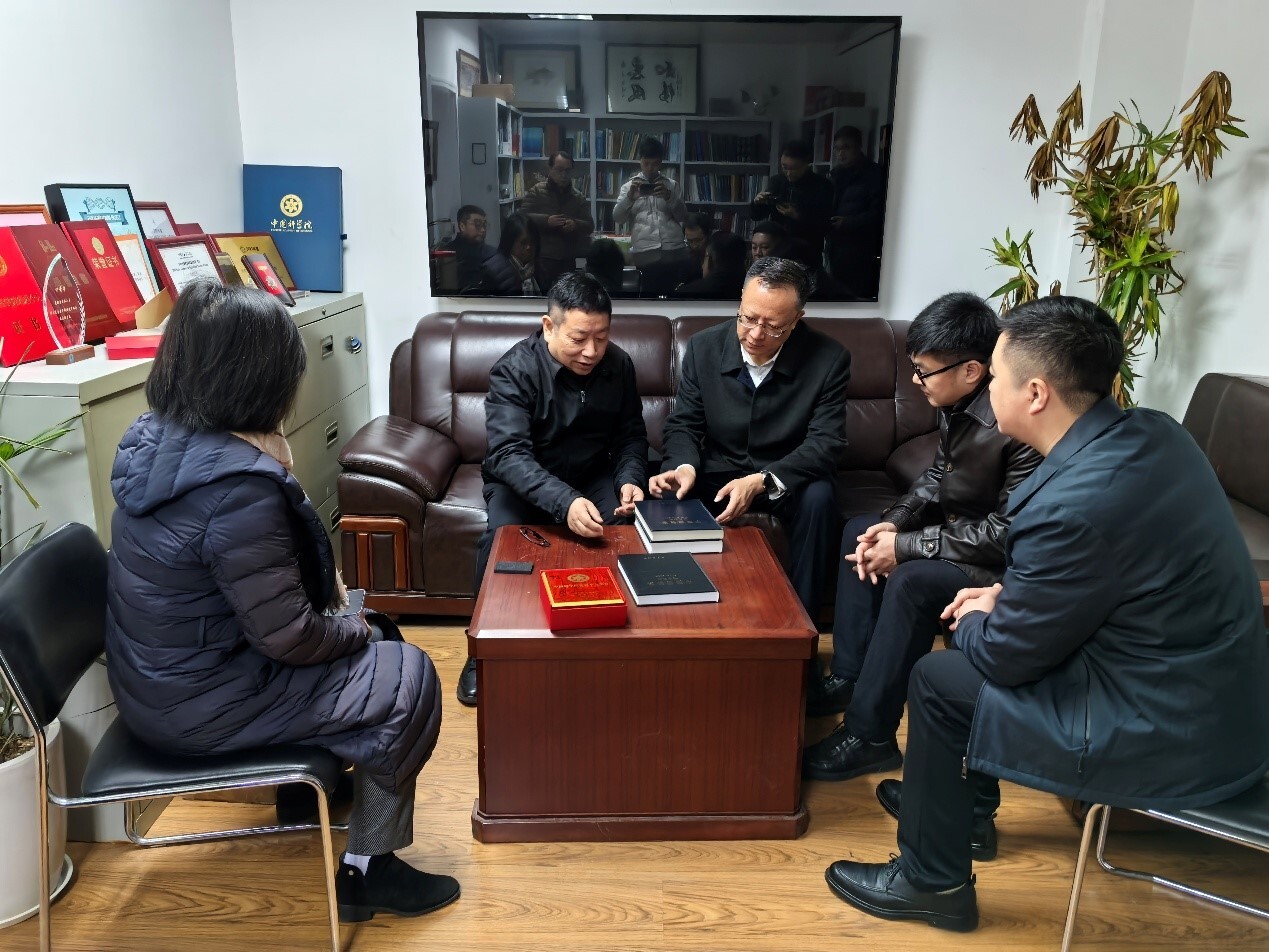
During the visit, the delegation paid a courtesy call on Prof. HE Shunping, a Luzhou native who was recently named a member of the Chinese Academy of Sciences. (Credit: IHB)