Newsroom
Sci-Tech Capacity Forum Explores Literature and Information Support Across the Research Lifecycle
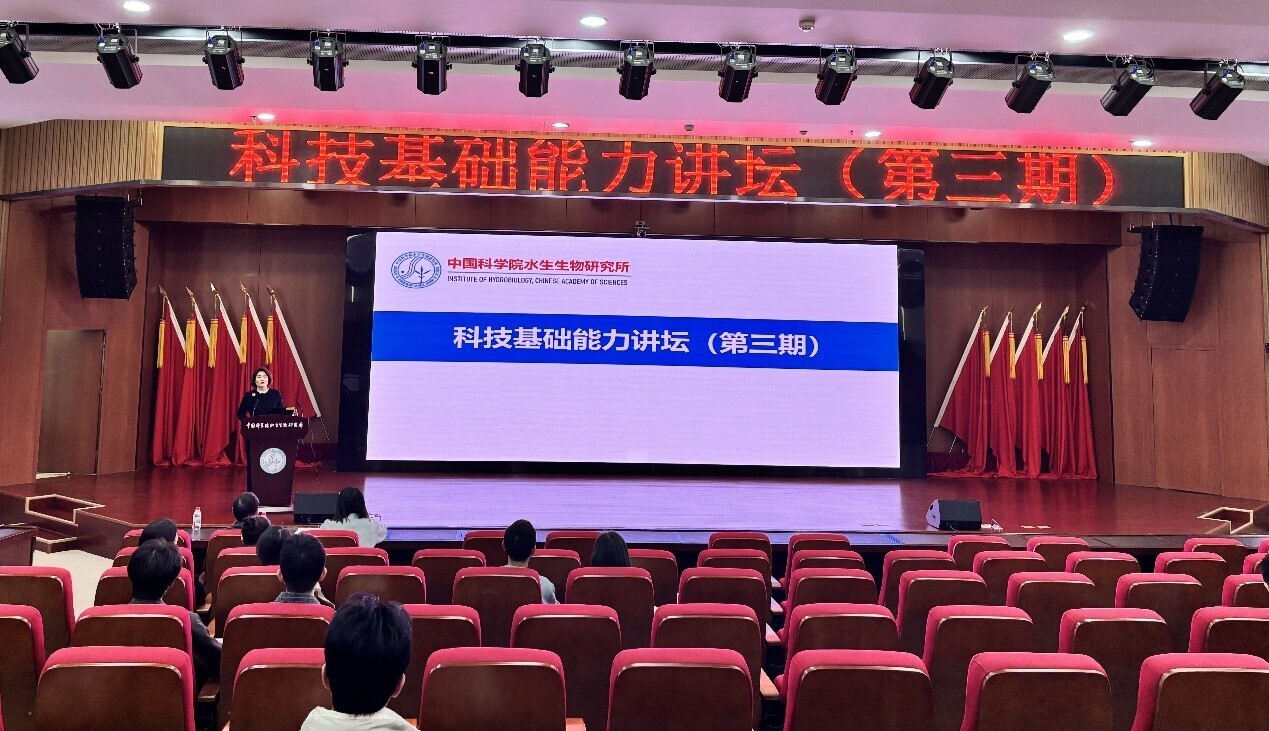
The 3rd Sci-Tech Capacity Forum invited Associate Research Librarian ZHAO Suting and Associate Research Librarian ZHOU Bozhu from the National Science Birary (Wuhan) of the Chinese Academy of Sciences as keynote speakers. (Credit: IHB)
On the afternoon of March 31, the Institute of Hydrobiology (IHB) of the Chinese Academy of Sciences hosted a session of its Sci-Tech Capacity Forum. The forum specially invited Associate Research Librarian ZHAO Suting and Associate Research Librarian ZHOU Bozhu from the National Science Birary (Wuhan) of the Chinese Academy of Sciences as keynote speakers.
ZHAO Suting delivered a report titled "From Project Establishment to Award Application: Indispensable Literature and Information Support Throughout the Full Research Lifecycle." Focusing on four key stages, project establishment, project implementation, project conclusion, and achievement award application, she systematically elucidated the crucial supporting role of literature and information services across the entire research process, drawing on typical case studies from within and outside the Chinese Academy of Sciences.
ZHOU Bozhu presented a talk titled "Subject Information Services as Drivers of Innovation in Research Institutes." He provided a detailed explanation of the core components of subject information services, covering six major areas: the role of subject information, work methodologies, basic subject services, science and technology landscape awareness, service layout and reform, and strategic consulting. Using specific service case studies, he elaborated on how these services support research institutes from three dimensions: scientific decision-making, research management, and the research process, aiming to provide comprehensive support across the entire chain of scientific research decision-making, management, and innovation.
Following the presentations, the two speakers engaged in interactive exchanges with the attending researchers and students. They provided in-depth responses to hot topics of concern, including the application of scientific research literature and information support for project applications, effectively addressing practical questions raised by the participants.