Newsroom
Guizhou CPPCC Delegation Visits IHB's Chishui River Station
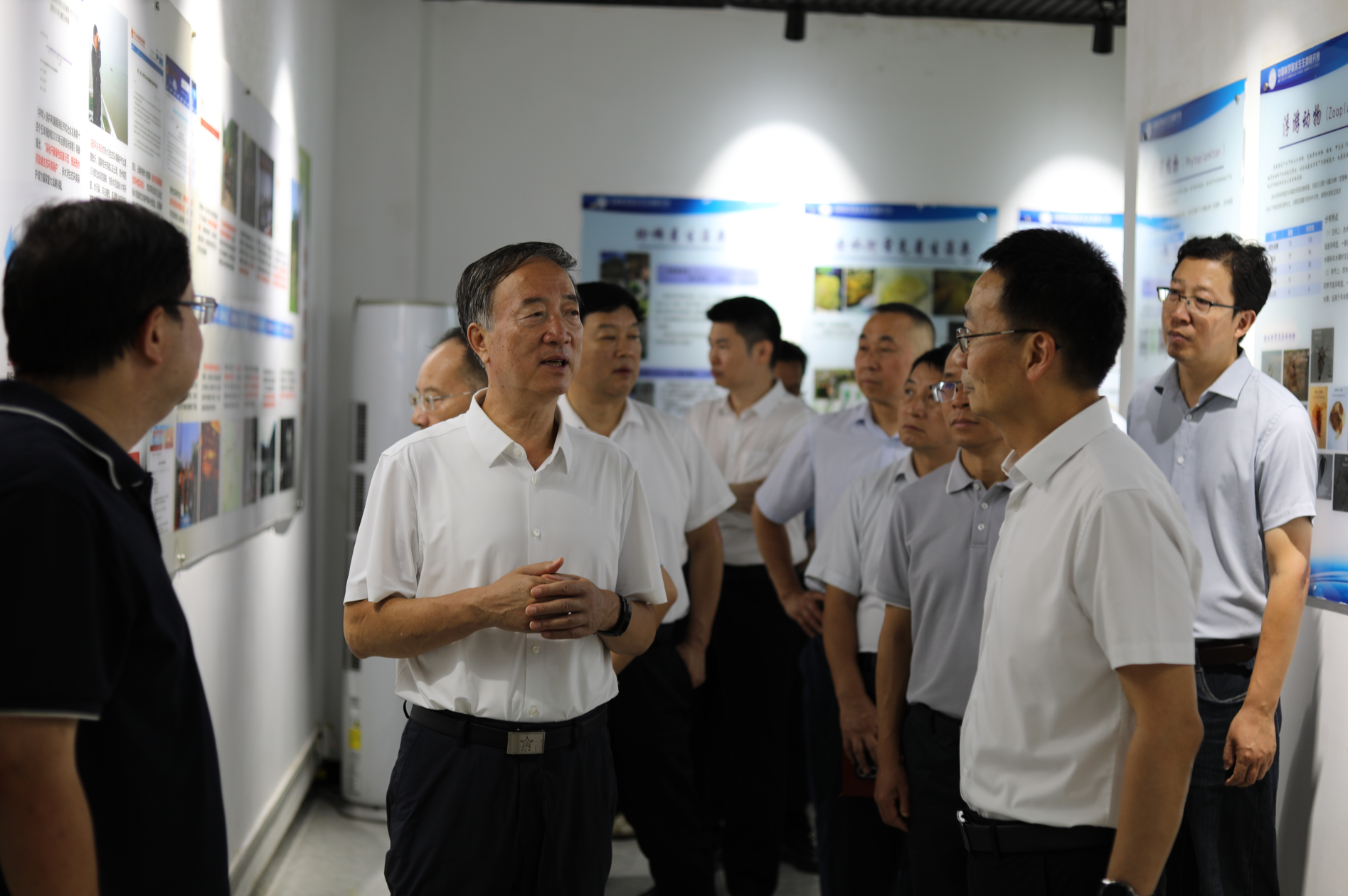
A delegation from the Guizhou Provincial Committee of the Chinese People's Political Consultative Conference (CPPCC) visited the Chishui Field Observation and Research Station for Rare and Endemic Fish Conservation and Aquatic Biodiversity on 18 August, 2026. (Credit: IHB)
A delegation from the Guizhou Provincial Committee of the Chinese People's Political Consultative Conference (CPPCC) visited the Chishui Field Observation and Research Station for Rare and Endemic Fish Conservation and Aquatic Biodiversity on 18 August, 2026. The station, operated by the Institute of Hydrobiology (IHB) at the Chinese Academy of Sciences, is China's only field station focused on rare fish conservation and aquatic biodiversity monitoring in the upper Yangtze River.
Led by ZHAO Yongqing, chairman of the Guizhou Provincial CPPCC, the delegation included officials from the provincial ecology and environment department and the development and reform commission. Following a river inspection at the Fuxing Bridge section, they toured the station's facilities and received briefings from IHB Director MIAO Wei and station staff.
MIAO Wei outlined the station's research priorities and operations. GAO Xin, deputy station director, presented findings on the ecological status of the Chishui River basin, the outcomes of the fishing ban, and conservation progress on rare and endemic fish species. The delegation toured the station's specimen collection and rearing facilities, with a focus on Yangtze sturgeon population restoration, small hydropower dam on tributaries removals and habitat rehabilitation, and advances in artificial breeding of endemic species.
ZHAO Yongqing recognized IHB's long-term commitment to protecting the basin. He noted the Chishui River's strategic role as a pilot zone for Yangtze protection and called for stronger collaboration between research institutions and local government. He urged the station to leverage its technical expertise in monitoring, research and science communication, and to translate scientific findings into practical watershed management outcomes.
MIAO Wei acknowledged the support of provincial and local authorities and confirmed that IHB would maintain long-term monitoring, continue work on rare fish breeding technologies, and pursue habitat restoration and outreach initiatives.
The Chishui River Station was established in 2021 as a CAS-level field station. In 2025, IHB and partners achieved the first successful spawning of Yangtze sturgeon in a near-natural environment, a milestone that moves conservation efforts from captive breeding toward wild population rebuilding. The station has successfully developed artificial breeding techniques for endemic species such as Ancherythroculter nigrocauda and Acrossocheilus monticola, offering critical technical support for wild population recovery. Researchers will continue monitoring and conservation work to support the Chishui River's role as a national model for Yangtze ecological protection.