Newsroom
State Key Laboratory of Breeding Biotechnology and Sustainable Aquaculture Holds 2026 Annual Meeting in Wuhan
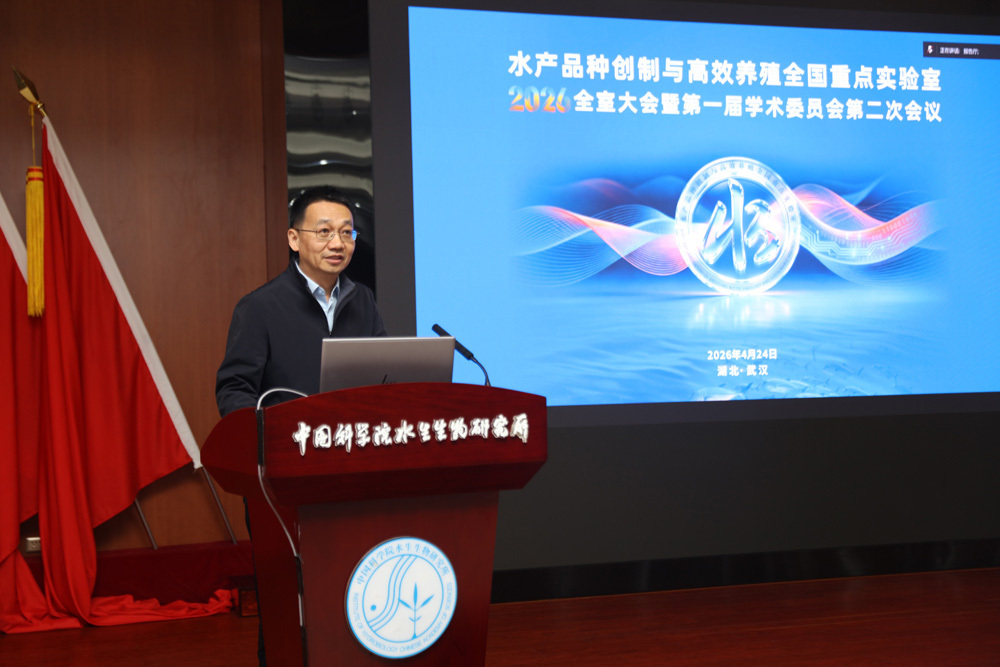
MIAO Wei, director of IHB, addressed at the meeting. (Credit: MA Yun)
The State Key Laboratory of Breeding Biotechnology and Sustainable Aquaculture, based at the Institute of Hydrobiology (IHB) of the Chinese Academy of Sciences in Wuhan, held its annual meeting on April 24. More than 100 scientists and officials attended.
The lab was restructured in 2025 as a joint effort led by IHB, with the Institute of Oceanology and the South China Sea Institute of Oceanology as participating institutions.
“The laboratory has achieved significant progress in research and talent development during its first full year of operation,” said IHB director MIAO Wei, who opened the meeting.
Miao said IHB would continue to support the lab. “We hope the laboratory will build itself into a world-class platform for aquatic science and a hub for top-tier talent,” he added.
The lab's establishment represents a major national effort to ensure food security and high-quality protein supply, Miao said.
HAN Yongbin, director who oversees research platforms at the CAS Bureau of Science and Technology Innovation Development, urged the lab to stay closely aligned with national needs. “It must continuously enhance its capacity for innovation and industrial service,” he said.
XU Zhen, the lab's director, reported that the lab had secured stable funding and produced a string of high-level results across four core research areas. Achievements included new breeding technologies, more patented technologies, and provincial science awards, he said.
Four IHB researchers presented findings on fish genetics and breeding. Their topics included speciation and genome evolution of Sisoridae fishes in China; a breakthrough in surrogate broodstock technology and its application in grass carp breeding; reproduction transition mechanisms and breeding technology innovations in gibel carp; and research into low-protein adaptation in gibel carp CAS VI.
The lab's academic committee session, chaired by CAS member CHEN Yiyu, praised its first-year performance. Looking ahead to the upcoming national evaluation, committee members offered several recommendations. They urged the lab to present its achievements more clearly, define its strategic focus and core scientific questions, and identify potential risks well in advance.
In closing remarks, Chen said the lab must align more closely with China’s aquaculture industry needs. He called for further refinement of research priorities, stronger cross-institutional collaboration, greater use of artificial intelligence in precision breeding and efficient aquaculture, and continued focus on talent development.
The lab said it would act on the recommendations and continue working to support China’s aquaculture industry and protein supply.
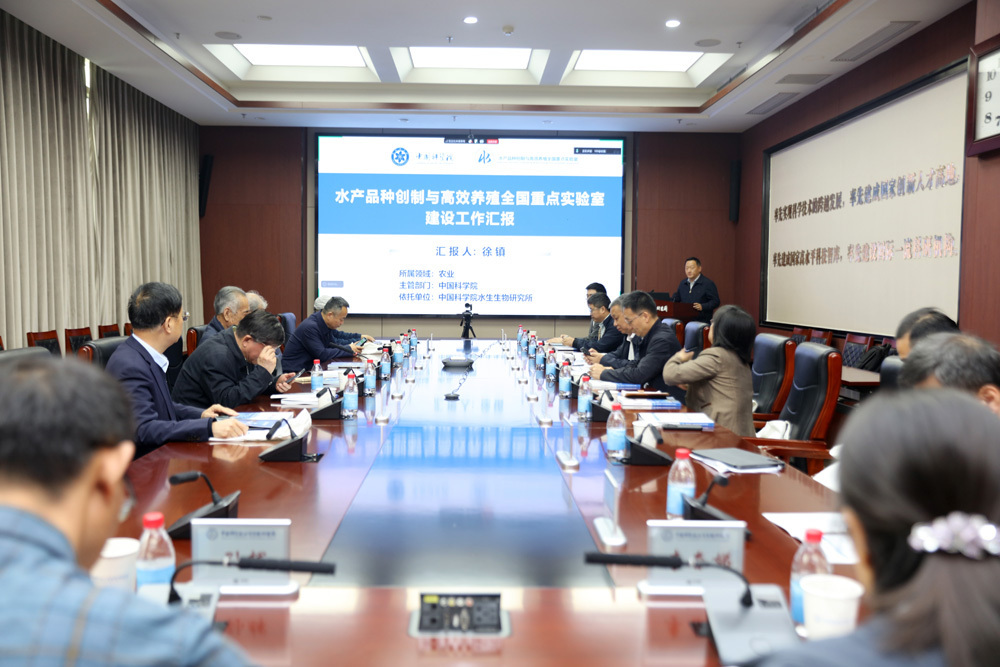
XU Zhen, the lab's director, reported that the lab had secured stable funding and produced a string of high-level results across four core research areas. (Credit: IHB)
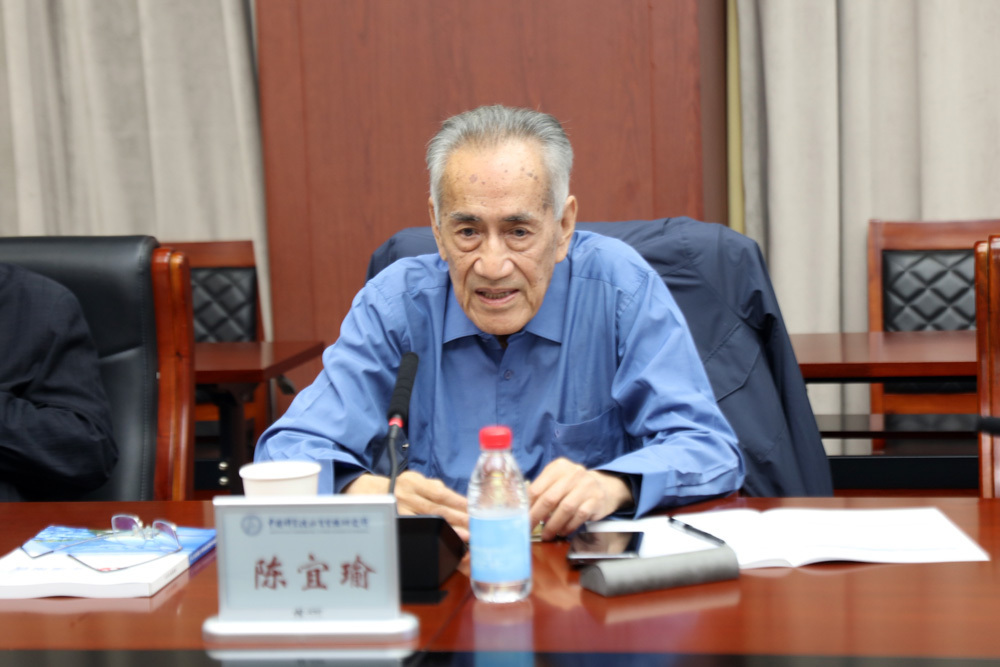
The lab's academic committee session, chaired by CAS member CHEN Yiyu, praised its first-year performance. (Credit: IHB)